
Exotic plants in our garden
Jacarandas seem like really resilient trees. Buddelias also grow well but are subject to wind damage as their root structure seems shallow.

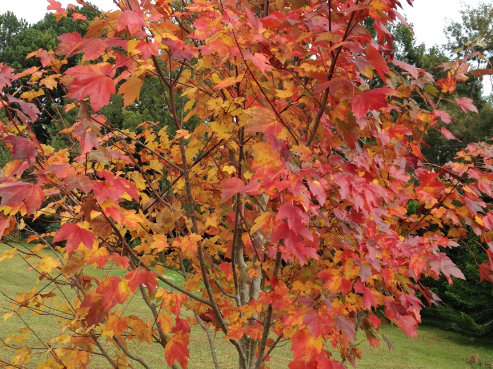
Lipstick maples in Autumn
Crepe myrtles are strong resilient trees. Bauhinias also have a lot to offer. Maples and Tupelos are great, as are Claret Ashes. Tibouchinas var. Alstonville and Kathleen are great. Variety Lorraine is too frail and is easily damaged by strong winds.
Shrubs that have done well are Poinsettias (double red) – white and other varieties lack vigour and are not recommended. Magnolias can be good but expect some weak varieties which grow poorly amongst those which grow well. Macadamias and Pecans thrive, but all other nut tree varieties – almond, hazelnut, walnut, chestnut, and tropical exotics grow poorly and are not worth trying.
Fruit trees are a mixed bag – custard apple and lemons are great, other citrus and figs, pears, peaches, nectarines and plums, mulberries – all low chill – have been failures.
Rhododendrons are very difficult to grow well – the spring here is far too hot and dry. Camellias on the other hand are resilient trees and can deliver lots of colour in the late Autumn and winter. Dogwoods will grow but flower poorly – the winters simply are not cold enough. The grafted Corymba ficifolias are a failure – not suited to this environment – best in a Mediterranean climate.
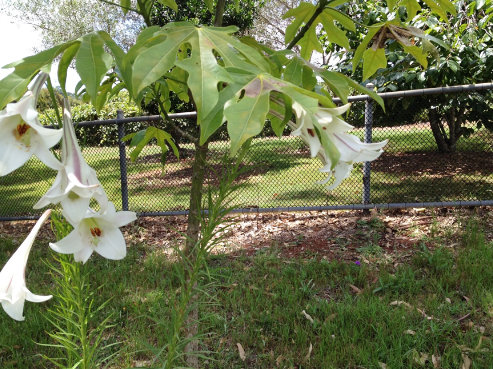
Rain lilies are abundant in February’s wet weather
The Gardening Seasons of the Frosty Subtropical Garden
Starting with Late summer: Temperatures of a subtropical nature can be experienced, but more likely thick cloud and regular rainfall reduce these to a more comfortable range than in the coastal areas. The soil is replete with moisture. This is the best time to plant, as the new plants may even be able to look after themselves if it is raining a lot. It allows you more time to keep the grass under control – the biggest challenge of this time of year. As well, this is a great time to add fertilisers which will be washed into the root zone. Big rain events such as were seen in January 2013 (Cyclone Yahzi) and March/April 2017 (another cyclonic event) can bring down the giant trees, usually eucalyptus, but also the much weaker Acacias. Plantings underneath them are damaged or wiped out, depending on where they fall.
Autumn: Gradually the temperatures fall and the weather clears for this magnificent time of year. The maples, grape vines and claret ashes and tupelos colour up, and with a little luck the winds allow the colour to stay around for a month or so before leaf drop.
Winter: The grass has stopped growing, so there is now more time to pay attention to the small details of the garden – to prepare for spring, pruning, removing the stick fall from the great eucalyptus, shaping the trees to your needs, heavily cutting back the temperate fruit and nut trees, mulching and weeding while the garden is slumbering. Heavy winds can damage trees and even bring down large ones. Usually a frosty morning follows a clear night, and the next day is warm, cloudless, and still, but all too short before you are looking for the warmth of the cottage and its old Crown wood stove, circa 1930.
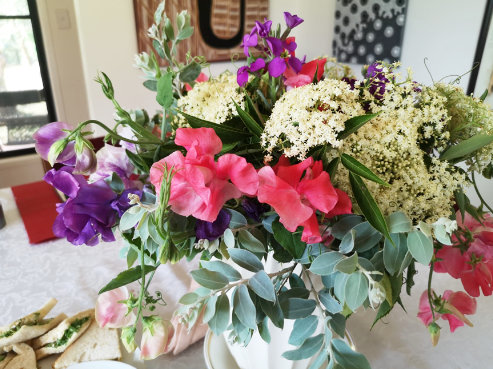
Bouquet of sweet peas and American Elderberry
Spring: If the winter has delivered rains, the plants enter the longer warmer days in better condition to give of their best. If there has been sparse rain, much of the spring gardening effort is focussed on watering and irrigating. Water from the weir and its billabong is pumped all over the property for irrigation of trees and beds, including drip irrigation. An exciting time of the year of colour and fragrance, as each plant reveals its beauty.
Early summer: Usually, this time of year is dry and increasingly hot. Plant water stress from heat and radiant energy has to be managed. Failure to do so can kill plants, even mature plants including natives, as we saw in 2019. If your time to water and irrigate is limited, then keep your fingers crossed for a decent thunderstorm. Mulching helps, as does strategic planting to take advantage of shade from the bigger trees. Although they provide shelter from sun, heat, and wind, the water needs of the big pine trees are huge, and they dehydrate the surrounding earth.
Full summer: The temperatures rise to above 30 deg C, but the saviour of the gardener is the constant summer breeze from the east and southeast. David stops work in the garden at 10.30 am, rests in the breeze until the temperatures drop about 4.30pm, before resuming work until dark. It is simply too risky to your health trying to do otherwise. The middle of the day in full summer is ‘Mad dogs and Englishmen’ weather, yet the temperatures are generally 6 degrees cooler than Brisbane, and 5 degrees cooler than the Gold Coast. At this time of year, the thunderstorms can bring us relief until the late summer rainy season sets in, and the gardening year starts all over again.