About our Garden on Mount Tamborine
The garden compartments: (David likes to refer to these as “compartments” but some gardeners prefer the term “rooms.”)
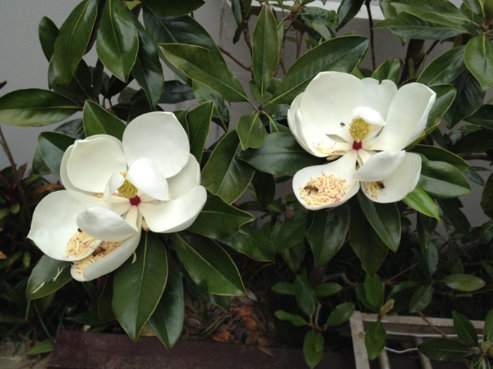
Magnolia Little Gem
First Avenue – the narrow 75 metre entrance to the wider property
Second Avenue – another 75 metre tree-lined roadway leading to the cottage
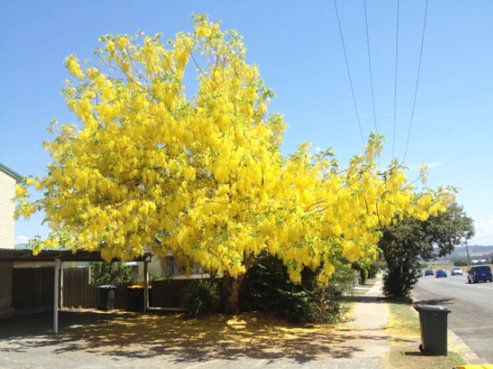
The Arboretum of Flowering Trees, with a cricket pitch and sunken Japanese dry-style garden.
The rhododendron and camellia walk, garden beds, perennial border, and wisteria tunnel.
The auditorium, an open space with a planned lawn tennis court, and a putting green
The billabong, weir, and picnic area.
The shade garden, creek side walk, and the parklands including the bush tucker area.
The cottage and its garden, fernery, nursery, patio garden and rose garden.
The orchard, vegetable and flower beds, and nut grove.
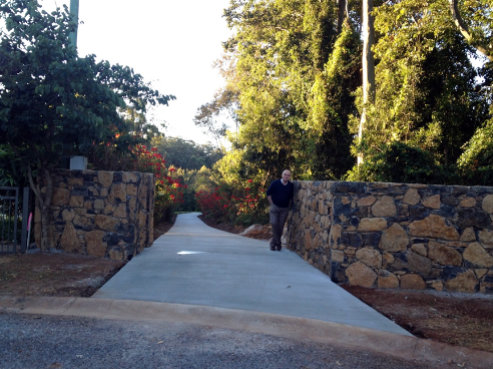
Entrance to The Overflow
In greater detail:
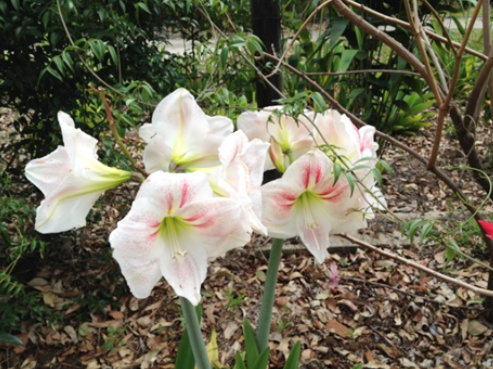
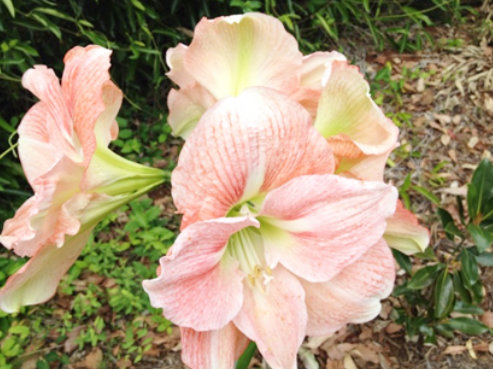
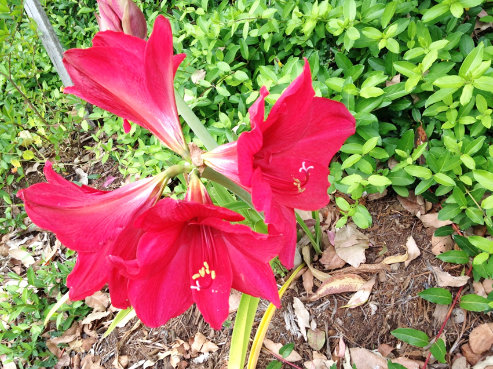
First Avenue: Entrance to The Overflow from Roslyn Court is via automated gates set into a rock wall fence. The roadway is concrete, an expensive undertaking but bitumen driveways in heavy rainfall regions never last long before they need repair. Plantings are designed to provide flowers during most of the year: Poinsettias in autumn, magnolias in winter, Bauhinias and hippeastrums in spring, crepe myrtles in full summer. Pandorea vines climb on the trees to provide colour during the late winter when the myrtles and poinsettias drop their leaves.
Future developments: David plans a Welcome Garden where visitors can rest, read about the property and receive comments about special features as the seasons change.
Koalas are found in the eucalypt forests of the escarpments, not in the rainforest.
Second Avenue: This is the second axis of the garden leading to the cottage. The avenue is lined with both white and blue jacarandas, flowering eucalypts, bauhinias and pink tibouchina.
Future developments: remove the flowering eucalypts, which have generally been a failure, and replace them with more tibouchina, both purple (‘Alstonville’) and pink (‘Kathleen’).

Koalas found in eucalypt forests on escarpments of Mt Tamborine
The arboriteum of flowering trees: The inspiration for this compartment comes from Merrigarth, an old and very beautiful Blue Mountains garden, where tall flowering trees surround a calm sanctuary space of open lawn. Azaleas and rhododendrons are planted in the shade of the large trees. Future development calls for this area to be further developed with flowering shrub plantings in the shade of the larger trees as they spread. This will be difficult to do as the area takes a lot of heat and radiant energy in full summer. A sunken dry-style Japanese garden is being constructed in the south east corner to give more balance to the overall garden experience, since visitors are naturally drawn towards the billabong and shady areas along the creek. As well, in the middle of the arboretum is a short cricket pitch. Tree species planted are silky oaks, jacarandas, kurrajongs, golden rain trees, flame trees, paulonias, tibouchina, tababouias, buckinhamias, and one Cassia javina. Hopefully it will be an area for visitors to play footy or hit-and-giggle cricket with their children or grandchildren.
The rhododendron and camellia walk, perennial border, wisteria tunnel and garden beds:

Purple Rhododendron Captain Caen
This area is situated in the broken shade provided by the huge Pinus elliotti and other mature trees like Waterhousia floribunda, callestemons, and casurinas. The large trees dehydrate the strongly acidic soil, so special efforts have to be made with plantings. Best camellia: Mrs H W Davis; best rhododentron: Mt. Everest. The perennial border has an eclectic collection of plants like dogwoods (grow but don’t seem to flower) and buddelias (yellow, deep purple, white and red) and May bushes (lots of white in the spring). The border will continue to be developed with more azaleas, rhododendrons and camellias, as well as classical perennial flowering species. Its success depends on protection of the cool temperate plants from the direct impact of sun by the forest in the north and east.
The wisteria tunnel consists of 8 Japanese wisteria standardised and supported on old, bent irrigation pipe and provides a variety of colour and fragrance in early October for about 3 weeks. Colours are blue, pink, white and deep blue.
The 8 garden beds carry a variety of shrubs and smaller plants. They are unfortunately subject to bush turkey damage and need constant attention with watering and mulching and fertilising. Successes: Japanese maples, camellias. Failures: Virbirnum opulus. Several rhododendrons exposed to too much sun have died.
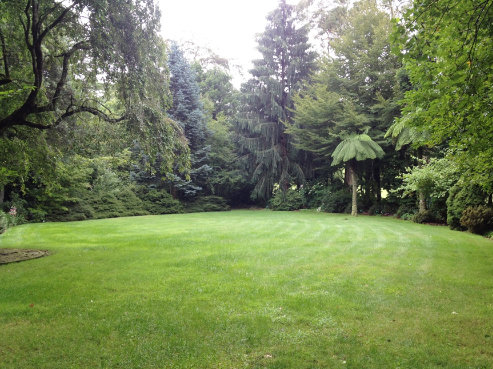
The auditorium: It took several years before David realised the value of the asset of an open field. Previously it had been a jungle of weeds, rocks, fallen and rotting timber but as the property developed, it became mowable. The birds – kookaburras, maggies, and plovers love the open space next to the tall trees. Hares frolic amongst the grass. But as this area has a gentle north west slope it is an ideal space for open air concerts, provided a stage could be provided. This has been done in the form of a putting green. In time, David hopes to hold recitals or open air concerts here, provided Scenic Rim Council approval can be obtained.
Future development will require surface levelling and weed control as this was once a rough cow pasture. Successes: Magnolia grandiflora (var. Exmouth) planted in a semicircle to disperse potential performance noise and to define the area and to provide shade for picnics.
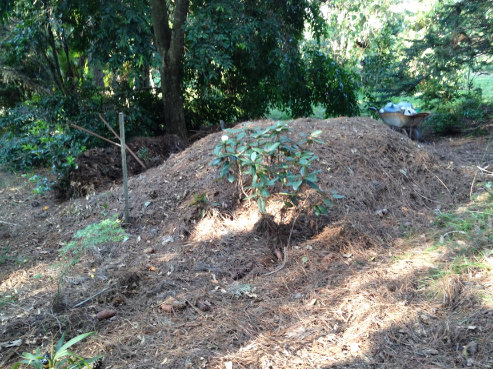
Turkey’s nest drowning plants
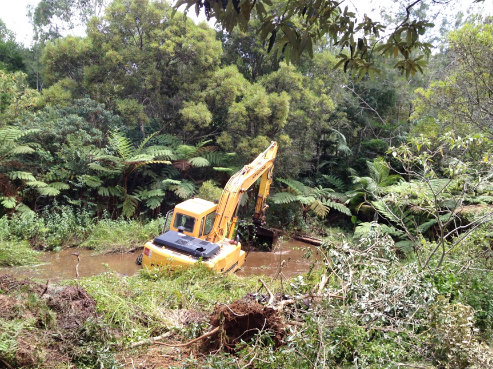
The billabong, weir, and picnic area: The weir holds back a shallow billabong surrounded by large mature tree ferns and is probably the most attractive region of the garden. Regrettably, the only signs of life have ever been observed frog larver and eels – no fish, or platypi have ever been seen. However, the nightly chorus of frogs can be deafening in the wet weather of late summer and at other times of rainfall. The weir symbolises the previous agricultural history of the Tamborine Plateau. That is why listing as a heritage structure was sought. These days, farming is limited to growing of avocados and fingerlimes. Early settlers grew citrus and flowers, and dairy farms were common. Most of that agricultural enterprise has now been converted to residential blocks and gardens. The national park wilderness remains, however, as the draw for ecotourism, the main focus of enterprise on the mountain. Next to the weir is a grassed area suitable for picnics.
The shade garden, creek side walk, and the parklands including the bush tucker area: The northern section of the property defined by Plunkett Creek has complete canopy cover and the floor is in complete shade. Plants growing here are shade loving examples. On the southern side of the creek is a walkway where visitors can observe the creek as it makes its way out through the boundary. Plant species here are picking up sun and so are those native species growing in a flood-prone riparian area. The walkway leads up the steep hill towards the cottage through a bush tucker compartment. Plantings of native food species surround a copse of native fingerlimes which are original vegetation. The copse has been recognised for its uniqueness as the fruit has skin which is almost black, and flesh which is pink. David has applied to the National Trust of Australia and the copse is now recognised as “trees of national significance”. The Indigenous Heritage organisation has also recognised these trees as of cultural significance to aboriginal peoples. A round grinding stone was located in the earth near the trees as if the fruit was used for food after having been ground to a paste.
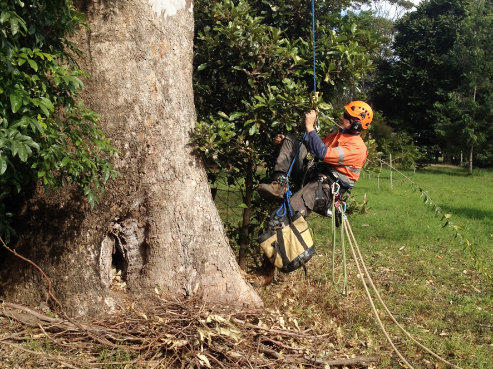
How we place nesting boxes
The other trees in this area, called The Jungle Room by David (after Elvis’s basement) are typical rainforest trees together with a selection of koala-friendly eucalypts: Red cedar, purple quandong, black bean, lilly pillis, silky oak, E. ovata, E. teriticornis, E. grandis, Gympie messmate, tulipwoods, hoop pines, bunyas, flame trees, and tallowwood. The area beneath these trees is mowed to produce a park-like appearance. It is hoped that as the trees mature, a population of native species like possums, gliders, microbats, and other marsupials might move in to make the trees their homes. Numerous nesting boxes have been placed in the trees.
The cottage and its garden, fernery, nursery, patio garden and rose garden: Jurabihl Cottage is a two story building constructed by Robert Gaute and staff in 2017. The name is Aboriginal for “a special place.” It is clad in two tone colourbond steel and surrounded by a 2 metre wide verandah. David lives downstairs and the second story is for guests with ensuite bedroom and a verandah overlooking the entire property. The southern side of the building allows shade for plantings of a typical cottage garden – salvias, hydrangeas, gardenias, dahlias, and other colourful plants. The western lawn contains a rose garden with mainly Brindabella rose selections. The northern garden is a barbeque space, and the eastern side a fernery and nursery.
The orchard, vegetable and flower beds, and grove: The orchard consists of low chill fruit trees and citrus – lemon, mandarin, grapefruit, lime, peach, nectarine, plum, pear, custard apple, fig, mango, and mulberry. To date, only the lemon, mandarin, and custard apple have been productive. The nut grove has two successful species – macadamias and pecans. All other nut species are not suited to the climate here and have been failures – walnut, almond, hazelnut, chestnut – they are alive but have barely grown and are unproductive. Various garden beds have been established for vegetables and cut flowers.
More photos from the Mount Tamborine Garden